Proptika: ÜTS-Integrated Product Tracking App
Nâsır Usta
Proptika is a product tracking app integrated with the Turkish Ministry of Health's Product Tracking System (ÜTS). It was built for opticians, pharmacies, and anyone selling eyewear in Turkey, to make their ÜTS work faster and simpler. I worked on the team as a developer and built the product's .NET (C#) backend.
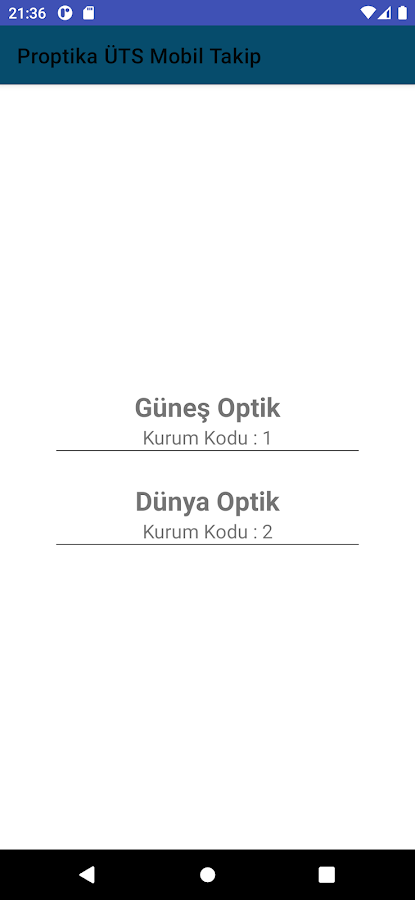
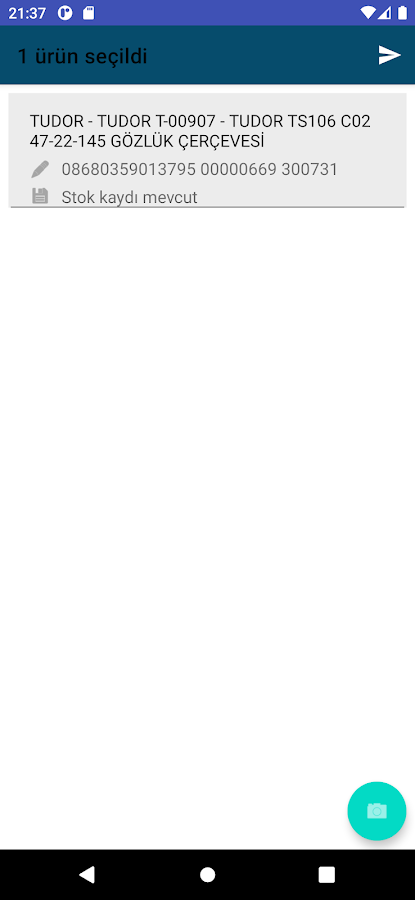
The app makes all stock tracking simple, it reads barcodes, and there is more besides. The Android app is built with React Native and can be downloaded from Proptika on Google Play. The web version is React, Redux Toolkit, and Tailwind CSS. A short summary, the tech, and screenshots live on the projects page. Marketplace integration is a separate piece of work; I wrote about that in the HubcartGo post.
An ÜTS app for opticians, in practice
ÜTS is the Ministry of Health's product tracking system. For an optician, a pharmacy, or anywhere that sells eyewear in Turkey, it is part of the day's work. Goods come in, they sit in stock, they sell, sometimes they come back, and each of those steps has a counterpart on the ÜTS side. When the work is split across too many screens, the day slows down: the barcode lives in one place, the stock figure in another, and the ÜTS notice waits in a third.
Proptika tries to hold that look in one place. Frames, lenses, solution, whatever sits on a pharmacy shelf — it is all stock. Seeing it simply, holding it with a barcode, and doing it from an app that talks to ÜTS is a need an optician and a pharmacist share even when they do not share a shop.
My share was the server. Mobile wants one shape of request, the web wants another; both have to look at the same record. I kept that record in .NET. When the screen stays quiet, it is often because the API is telling the truth.
Why a product tracking system sits the way it does
An app integrated with ÜTS is more than a plain stock list. The product has an identity, the barcode is a short path to that identity, and the stock record says what is on the shelf. When the app holds those together, reading a barcode and seeing stock become one motion. When it does not, the user is back to two screens: a code on one, a quantity on the other.
That is why I do not think of Proptika as a few forms placed side by side. An optician's day is short and a pharmacy's day is shorter, yet both still have to deal with ÜTS. If the app simplifies that look, taking out a phone at the counter and reading a barcode is enough; if it does not, nobody opens a second tool. Simple stock tracking means showing the right record in fewer steps.
The web side is the same job at a desk. The list is wider, the look is more settled, and it is still the same stock and the same product. Mobile and web should not drift into two worlds, so both come to the same backend — the place where ÜTS is spoken to, where stock lives, and where a barcode has a meaning.
What it does
- Integrated with the Turkish Ministry of Health's Product Tracking System (ÜTS)
- Makes all stock tracking simple
- Reads barcodes
- Has a mobile app (Android) and a web version
- And more
Mobile, web, and the .NET backend
The Android app is built with React Native. Taking out a phone at the counter and reading a barcode is the natural shape of this work, and a native Android app fits it. Proptika on Google Play matters for the same reason: install it from the store, keep it updated, keep it in the hand.
The web version is React, Redux Toolkit, and Tailwind CSS. React builds the screens. Redux Toolkit keeps stock and product state shared across those screens, so the quantity on one list is the quantity on the next. Tailwind keeps the interface in one language, so a second design system does not grow in the corner. On a desk it is a stock list, a wider screen, the same job done sitting down.
The backend is .NET and C#. Mobile and web both come here. Why .NET? The team was already on that path; I built a proper API in C#. A typed backend stops the two clients from each inventing their own truth. A product is in stock or it is not; a ÜTS action exists or it does not. I did not want to explain that twice, in two dialects. The server says it once; Android and the web listen.
The three layers sit like this: React Native on Android, React on the web, .NET as the shared server. I am the third; the first two belong to the team. If the backend holds, mobile and web can breathe. If it slips, both slip.
What I learned
Writing a backend in a regulated domain is not the same as writing a panel for your own product. ÜTS is a ministry system, so what the API says and what the ministry side expects have to match. I learned that in a team, on an API that a phone and a browser hit at the same time. A record exists or it does not, a notice goes out or it does not, and the server has to carry that fact.
Serving a phone and a browser from the same backend is its own job. React Native asks one way, React another, and if there is no single model in the middle the two clients see two stocks. I tried to keep that as one thing in .NET. What I learned is how easily two clients drift off the same record, and how that drift starts in the API, not on the screen.
Making all stock tracking simple is not piling everything into one list. It is showing the right record, bound to a barcode, in fewer steps — and opening the camera is not enough unless what you read attaches to a product and to stock.
Frequently asked questions
What is Proptika?
Proptika is a product tracking app integrated with the Turkish Ministry of Health's Product Tracking System (ÜTS). It is an ÜTS app for opticians, pharmacies, and anyone selling eyewear in Turkey. Stock tracking is simple, it reads barcodes, and it has mobile and web versions.
Who is the ÜTS app for opticians for?
It is built for opticians, pharmacies, and anyone selling eyewear in Turkey. An optical shop, a pharmacy counter, and anywhere else that sells glasses sit in the same ÜTS loop.
Where do I get the Android app?
The Android app can be downloaded from Proptika on Google Play. There is a web version as well.
What was your role?
I worked on the team as a developer and built the product's .NET (C#) backend.
I also summarise Proptika on the projects page. Marketplace integration is a separate piece of work; I wrote about that in the HubcartGo post.