StoreHub: Multi-Site Management System
Nâsır Usta
StoreHub is a content distribution system I designed and built solo for a client. Products, categories and posts are prepared once. The system pushes them to 35+ independent e-commerce and blog sites through each site's own API. A per-site watermark is applied at send time, images become WebP, sends can be scheduled or spread across days, and the same content does not go to the same site twice. When distribution finishes, the record is archived. Translation on the target sites can be triggered from the panel; StoreHub does not translate the text itself. It is a PHP 8 / Slim 4 REST API and a React 18 admin panel.
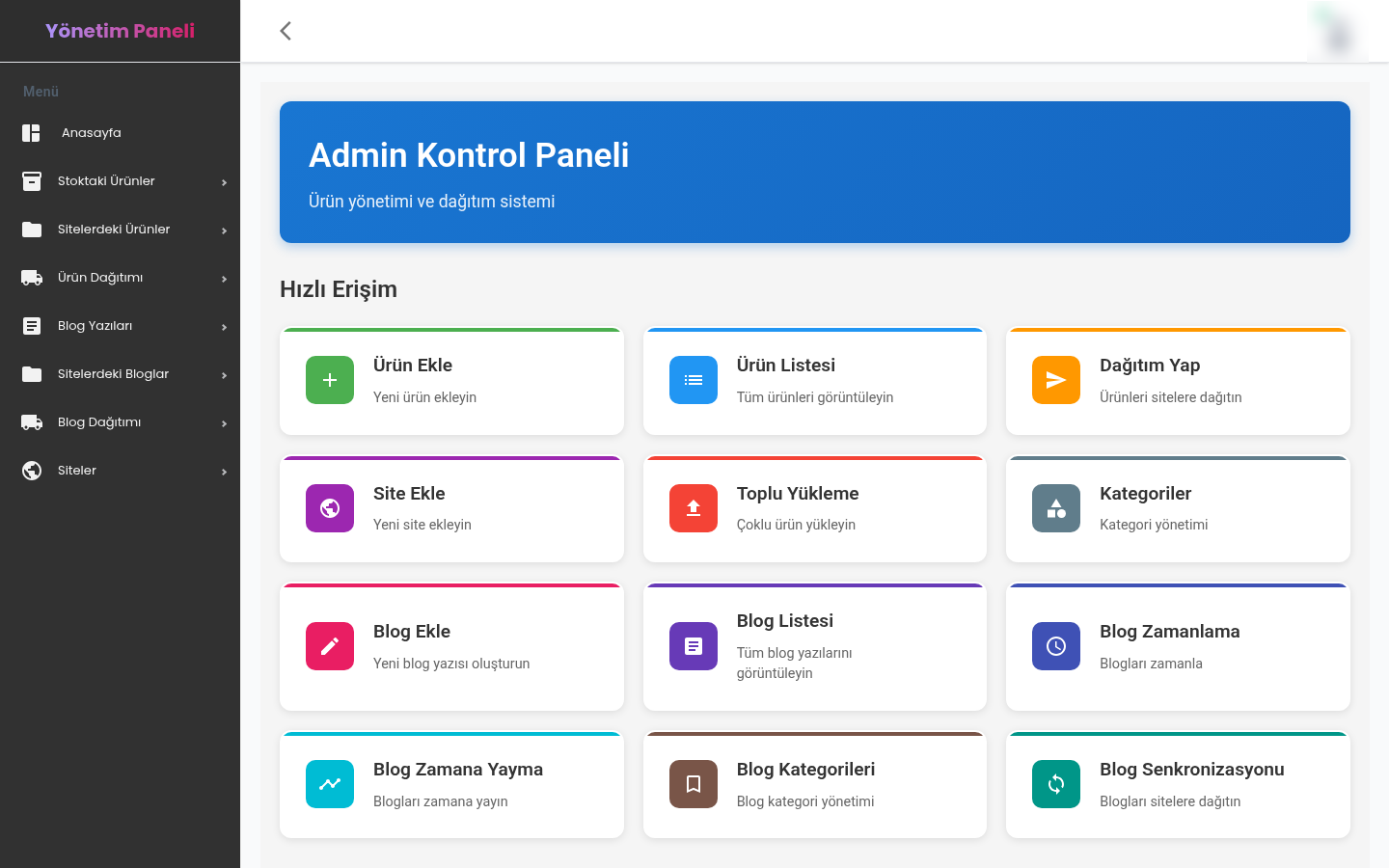
The short version, the feature groups, the tech, and live-panel screenshots live on the projects page. Marketplace integration is a separate piece of work; I wrote about that in the HubcartGo post.
Why a central catalogue
There are 35+ sites, some selling and some publishing. If each has its own panel, the work starts again at every door: a product sits here and is missing there, a category slips, the same post is born more than once. The centre cuts that repeat. The product is written here, the category is built here, the blog lives here, and a site is an edge of that record.
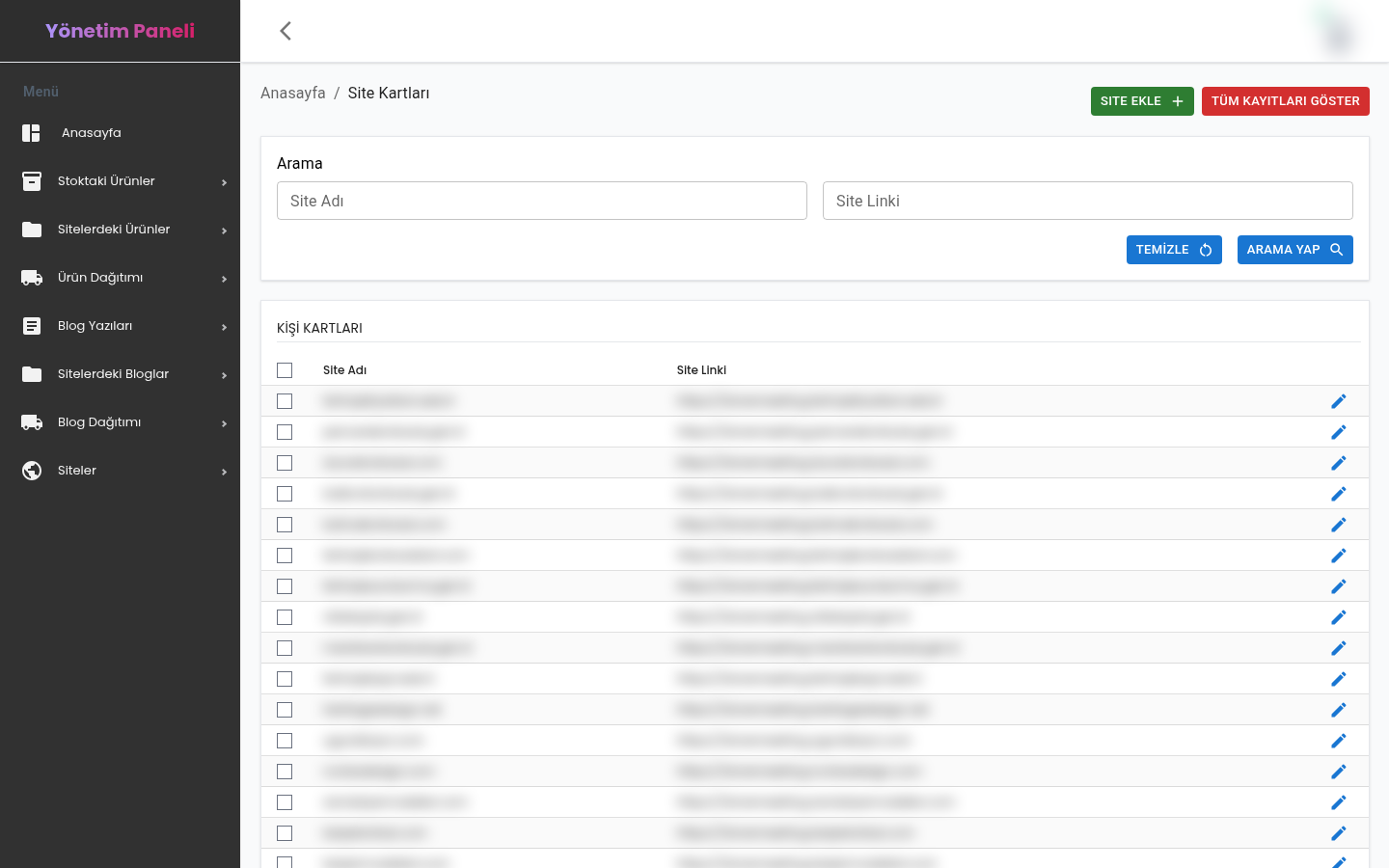
StoreHub does exactly that. Each site connects through its own API. Delivery is a push integration authenticated with a per-site API key. The door is on the site; the catalogue is in the centre.
Distribution, watermarks and the image pipeline
The user picks products, a site and a remote category, then sends — or sets up a schedule. The watermark is applied at send time to a temporary copy: a frame colour, a transparent logo in the centre, a logo at the bottom. The original stays clean. The same image leaves each site with that site's brand, so a designer does not prepare a separate file per site.
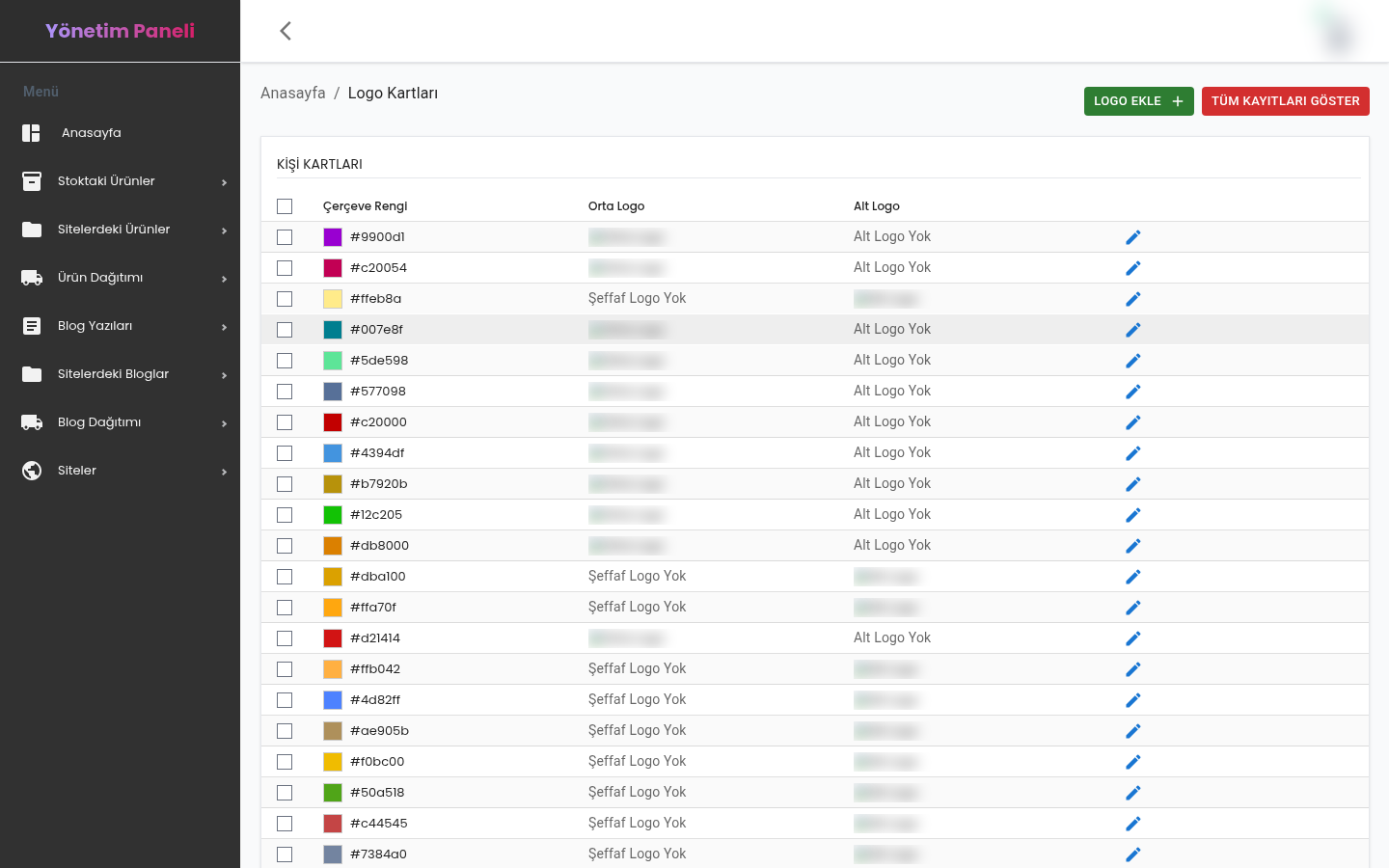
The image pipeline keeps aspect ratio and transparency, converts to WebP, and steps quality down until the file is ≤120 KB. Sites open with light images. Images added from the editor go through the same pipeline.
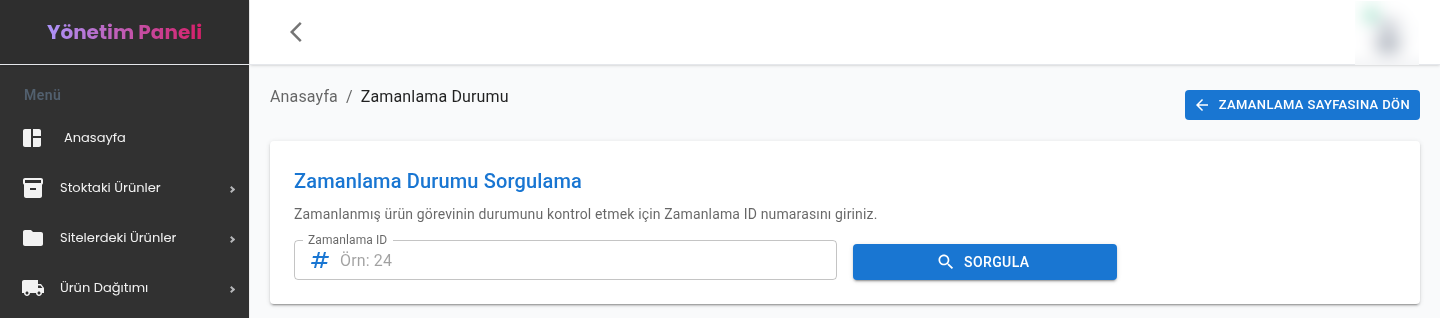
A schedule is set for a later date and time. Jobs can wait, run, complete, fail, or be paused, then resumed in bulk. Status can be looked up by schedule ID. Spreading over days splits the selected content and previews the daily split, so a site does not receive a dump in a single day.
Each content–site pair is a single record, so the same content does not land twice. Items that already went to that site successfully are dropped when a schedule is created. Unsent and unscheduled filters make the gaps easier to pick.
When every schedule for a piece of content has finished, the record is archived and the files in the centre are deleted. The centre does not fill up with content that has already been distributed.
Excel, Word and triggering translation
Excel bulk product import takes an .xls, .xlsx or .ods file plus multiple images. A row becomes a product: name, meta title, meta description. Turkish character corruption is fixed automatically. Images are paired with products in order. Hundreds of products are not typed one by one.
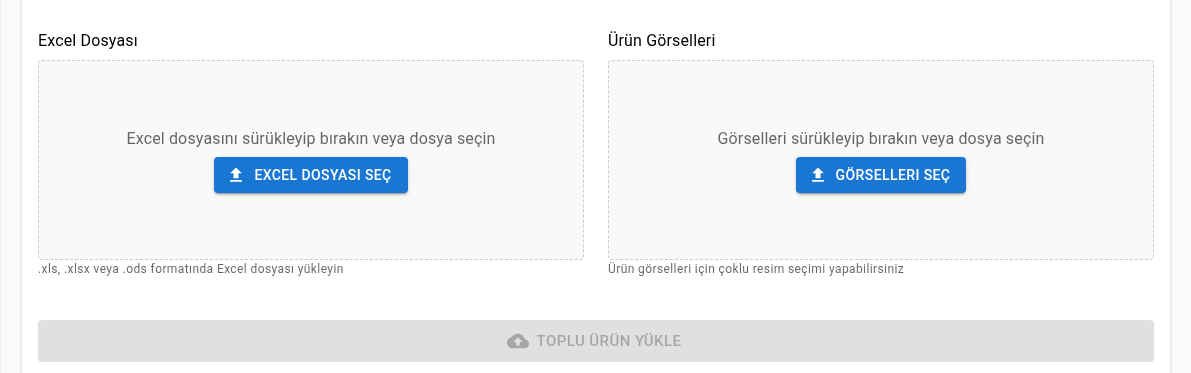
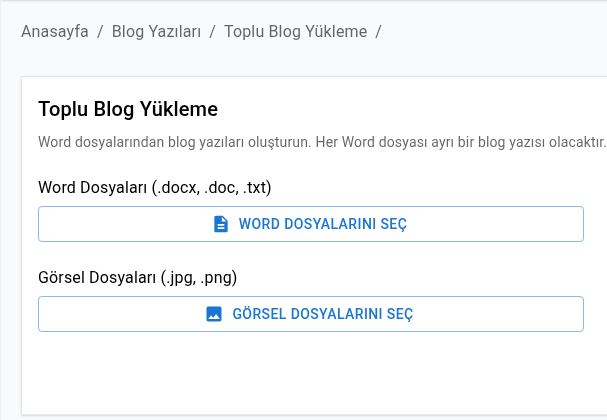
Word bulk blog import takes several .docx or .txt files plus images. Each file becomes its own post. On send, the post HTML is scanned. Every image in the body is downloaded, uploaded to the target site's media API, and rewritten to that site's address. A published post does not depend on an image sitting somewhere else. Each site hosts its own media.
Translation orchestration triggers the target sites' translation endpoints: all modules, one module, or a single record. The panel offers 10 target languages. StoreHub does not translate the text. It starts the work on the remote sites. On a multilingual site you do not have to open every panel to begin translation.
What it does
- Central product, category and blog catalogue
- Per-site dynamic watermark
- Adaptive WebP image pipeline (≤120 KB)
- Scheduled distribution spread over days, with pause and resume
- Duplicate-send prevention
- Excel bulk product import with the Turkish character fix
- Word bulk blog import, with images migrated to the target sites
- Central translation triggering for 10 languages on the target sites (StoreHub does not translate itself)
- Auto-archiving
Tech choices, and why
The backend is PHP 8 and Slim 4. Slim is a small HTTP layer. REST and JSON are already the definition of the work, so the framework should stay quiet. Eloquent ORM is for the catalogue: product, category, blog and site are rows with relations among them. JWT works with access and refresh tokens, so a password is not sent on every request. Data sits in MySQL/MariaDB. Image work is PHP GD: sizing, WebP, watermark. PhpSpreadsheet reads Excel. Calls out to the sites go over cURL. Cron ties product and blog schedules to time.
The panel is a React 18 SPA. Redux Toolkit holds session and state. React Router 6 wires the screens. MUI and Tailwind build the interface. Formik and Yup validate forms. Quill writes rich text. A non-technical user runs product, distribution, blog and site work from one UI.
What I learned
35+ doors do not make the work hard. Separate catalogues behind those doors do. A watermark at send time leaves one clean original. Stepping WebP quality down until the file fits keeps size without flattening every image. Moving images from a Word post onto the target site is what makes the published piece independent of the centre. Triggering translation from the centre is not the same as translating in the centre. Those jobs should not be confused.
Frequently asked questions
What is StoreHub?
StoreHub is a content distribution system that pushes products, categories and posts from one centre to 35+ e-commerce and blog sites. It is a PHP 8 / Slim 4 REST API and a React 18 admin panel. I designed and built it solo for a client.
How many sites does the multi-site management system cover?
35+ websites. Some are e-commerce, some are blogs.
Which jobs run from the centre?
The central catalogue and blog, per-site dynamic watermarks, the ≤120 KB WebP pipeline, scheduling spread over days with pause and resume, duplicate-send prevention, Excel bulk product import, Word bulk blog import with image migration, translation triggering for 10 languages on the target sites, and auto-archiving.
What was your role?
I designed and built it solo for a client.
I also summarise StoreHub on the projects page. Marketplace integration is a separate piece of work; I wrote about that in the HubcartGo post.